


The Long Game After the Big Game



Turning Super Bowl visibility into lasting mental availability
There are roughly 350 million people in America, and one Sunday night each year, more than a third of them tune in for the biggest show in sports: the Super Bowl.
For advertisers, the Super Bowl delivers attention at scale in a media environment where both are increasingly hard to come by. And that attention hasn’t faded. Viewership has grown year over year as the Super Bowl has long held its position as a true cultural moment of mass audience appeal. In 2025, viewership hit a record high of 127.7M.
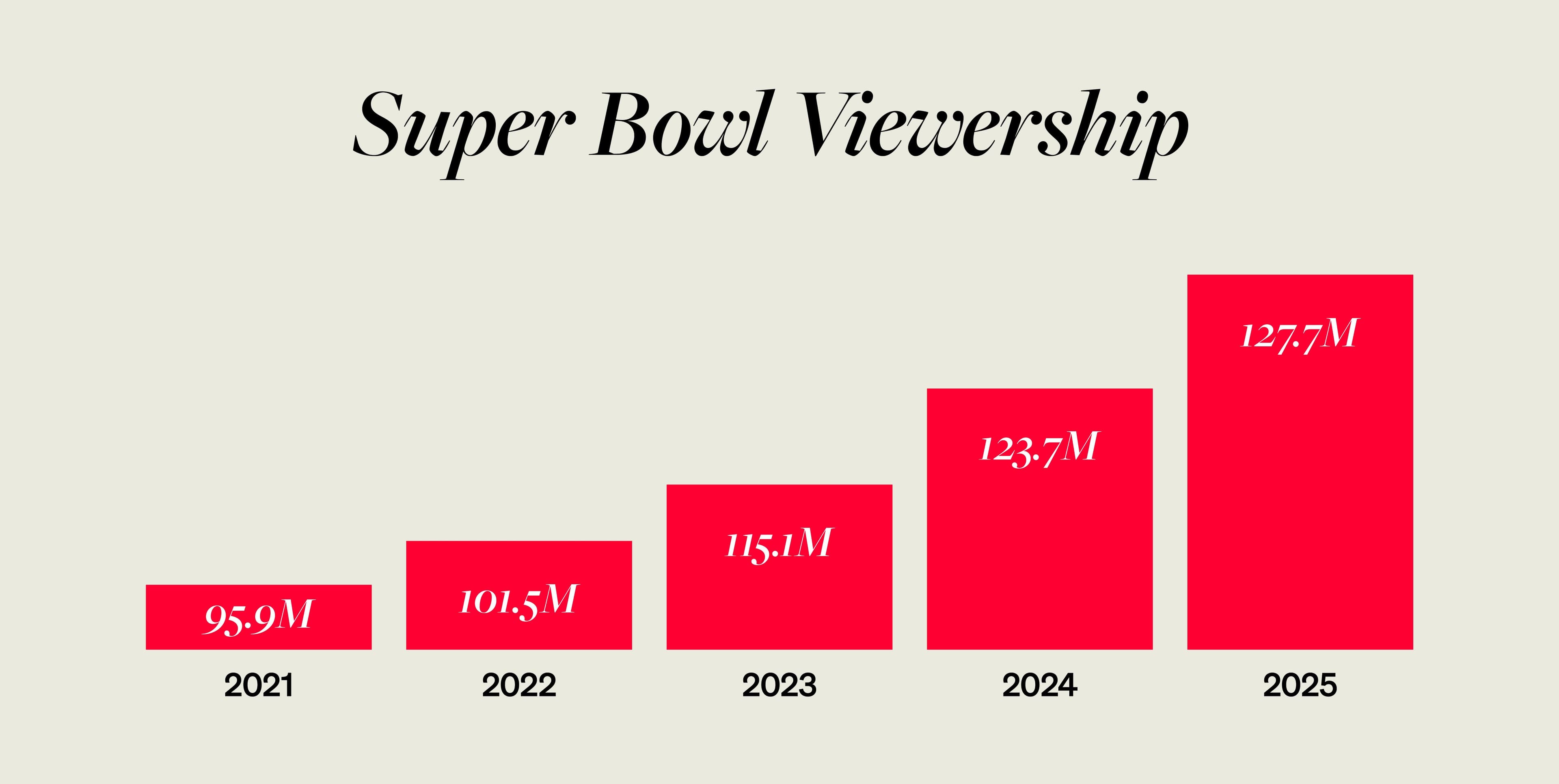
Source: Super Bowl Viewership, Neilsen
The combination of reach and undivided attention comes with a hefty price tag. In 2026 for Super Bowl LX, a 30-second commercial will cost $8 million, which translates to an eye-watering $266,666 per second of air time.
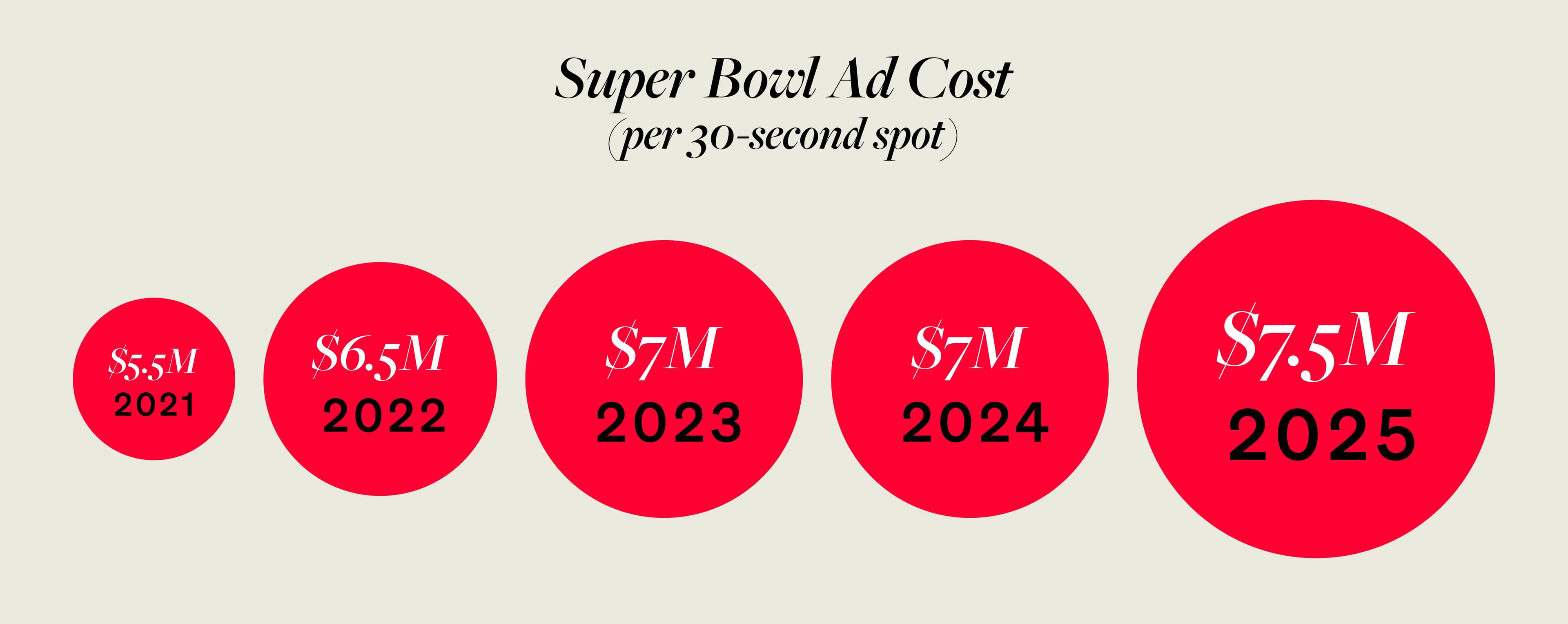
Source: Industry estimates
In addition to production costs, CMOs could be looking at a total investment of 7 - 8 figures for their brand's visibility during the most popular Sunday night of the year.
And with that level of investment, the real question becomes: how do brands ensure a single night of attention translates into long-term brand growth?
At its core, Super Bowl advertising can accomplish two very important things for a brand: creating fame and building memory. Both are valuable and closely related, but they ultimately serve different purposes and deliver impact on different timelines.
What is brand fame?
Brand fame is the brand’s ability to capture mass attention, cultural relevance, and immediate share of voice. It’s the buzz on social feeds, the Monday-morning recaps, and the feeling that the brand is a big part of a big moment.
The Super Bowl is an exceptionally good opportunity for achieving brand fame. Few platforms can reach such a large audience and help a brand feel culturally relevant. For many brands, this burst of fame is the primary goal of showing up on Super Bowl Sunday.
What is brand salience?
Brand salience, on the other hand, is the likelihood that a brand comes to mind when people are actually making buying decisions. It’s the distinctive brand assets, the memories tied to real needs, and the advantage of brand association with category entry points.
While fame happens quickly, salience builds over time. It depends on repetition, consistency, and clear brand linkage to the category.
The Super Bowl can deliver both fame and salience, but it doesn’t guarantee both. While the attention spike is immediate, determining lasting impact relies on what brands do with that attention once the big game is over.
Super Bowl advertising is built to win the moment. The brands that spark conversation, generate headlines, or dominate social mentions often feel like the clear winners on game night.
But attention and memory don’t behave the same way. Attention can fade as quickly as it arrives while memory builds gradually through reinforcement and familiarity.
That’s where many Super Bowl moments lose momentum. When an idea lives only on Sunday night, even the strongest creative can struggle to have a lasting impact on brand growth.
Creative consistency plays a critical role here. The Power of Compound Creativity, a report from System 1 and The Institute of Practitioners in Advertising, analyzed 5,000 ads from 136 brands over five years and found that brands that consistently repeat recognizable ideas and distinctive brand assets across channels generate significantly stronger business results compared to inconsistent brands.
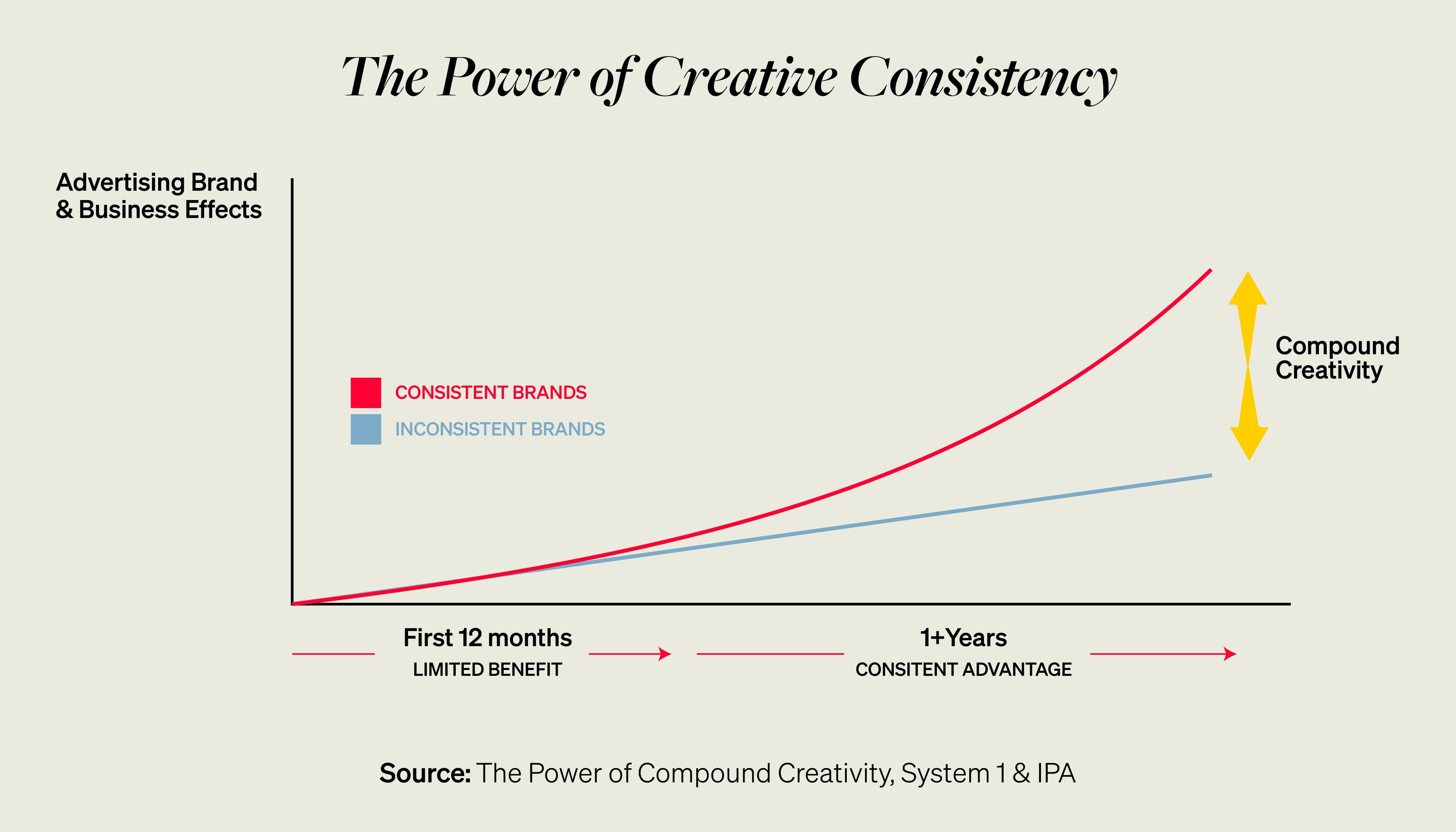
This is where a brand’s strategy for the Super Bowl should shift from a single attempt at fame that sparks short-term attention to a system of salience that drives lasting memory.
This makes the big cost of a Super Bowl ad easier to justify internally. It reframes the investment from a high-stakes bet into a catalyst for a longer-term brand platform designed to compound value over time.
When Old Spice launched “The Man Your Man Could Smell Like” during the 2010 Super Bowl, it did more than introduce a new ad. It helped reposition the brand from a legacy soap associated with older consumers into a culturally relevant category leader.
The ad delivered instant brand fame via a new character played by Isaiah Mustafa, who delivered a confident, absurd monologue against a backdrop of rapid-fire scene changes with an unmistakable tone that made the spot impossible to miss and easy to talk about. It also popularized the Old Spice Whistle sonic device, and the catchphrase “I’m on a horse” entered pop culture almost immediately.
But Old Spice didn’t treat the Super Bowl ad as a one-off success. It used it as a springboard for a new brand platform by leveraging those distinctive brand assets in creatively consistent ways in additional commercials and new formats across different channels.
And the business impact followed. According to Nielsen, by May of 2010 unit sales of Old Spice body wash had increased 60% from the previous year, and by July, year-over-year sales had more than doubled.
Old Spice’s Super Bowl moment worked because it didn’t end with a famous moment on game night. The brand used attention as a catalyst, then reinforced it through repetition and consistency, effectively turning a viral hit into sustained brand growth.
1. Fame is the means. Salience is the end.
While the Super Bowl is unmatched in its ability to generate attention and cultural relevance, fame only creates value when it strengthens memory. The most effective brands plan and measure for what happens after the spotlight fades by using viral attention to reinforce recognizable brand cues and category associations that drive long-term salience.
2. Choose ideas built for continuity.
Investing millions into a Super Bowl ad means the idea needs to live beyond the big game. Ideally, it should serve the brand for years to come with the ability to adapt to different channels and open doors to new creative applications while remaining consistent and recognizable to consumers. Additionally, conducting creative testing of an idea, a concept, or a storyboard before it goes into production will create confidence that the idea is one that can last.
3. Measure success over time, not overnight.
It’s easy to get excited when a Super Bowl ad is an immediate hit, and metrics like social mentions, earned media coverage, and critical acclaim are certainly early indicators of a successful campaign, but CMOs who get the most out of Super Bowl investments look beyond reaction metrics and focus on indicators tied to memory and mental availability over time. Metrics like unaided awareness, top-of-mind-recall, distinctive asset recognition, and of course, sales lift, provide a clear picture of whether Super Bowl attention is translating into lasting brand impact.
Does Super Bowl advertising drive immediate sales?
Super Bowl advertising rarely drives immediate sales on its own. Its primary value lies in building long-term brand memory and preference, especially when supported by consistent follow-on media and creative repetition.
What’s the biggest mistake brands make with Super Bowl ads?
The biggest mistake is chasing novelty at the expense of recognizability—creating ads that win attention on game night but fail to reinforce who the brand is or what category it belongs to.
How should CMOs evaluate Super Bowl ad success?
Beyond short-term buzz, success should be measured using indicators tied to memory and mental availability, such as unaided awareness, distinctive asset recognition, and sales impact over time.
The Super Bowl will always be a big moment. The brands that win are the ones that treat it as the beginning of something bigger—turning one night of attention into lasting mental availability and sustained growth.